


Most recent idle moments in 2026
Sunday August 2nd, 2026
Proms (Mahler’s First by heart ) and Tate Modern

Today we went to see the second performance of the Aurora Orchestra conducted by Nicholas Collon giving their treatment to Mahler’s Symphony No. 1 in D major - performed from memory. I'd always thought Mahler to be a bit serious and glum for me but was surprised to find I found the symphony more accessible than the Shostakovich that we heard last year. Following the format, the first half was dramatised with the actors using words directly penned by Mahler or his wife Alma - as well as the mandatory audience participation. As Mahler explained, he wanted to include everything in life in this "symphonic tone poem": birdcalls (the cuckoo), klezmer bands, folk dances, soldiers, funeral marches and song. The symphony integrates themes from Mahler's own song cycle, and so we were treated to a performance by mezzo-soprano Natalie Lewis as an introduction to the complete performance of the symphony in the second half.
After a revitalising lunch, we were off to the Tate as I wanted to see Tracey Emin: a Second Life before it closed. It was not so easy to view. I found the short video Why I Never Became a Dancer very moving. In this piece she relates how as a teenager she tried to leave Margate by winning a disco dance contest, and shames those ruined it; she is seen dancing joyfully to "You Make Me Feel (Mighty Real)".
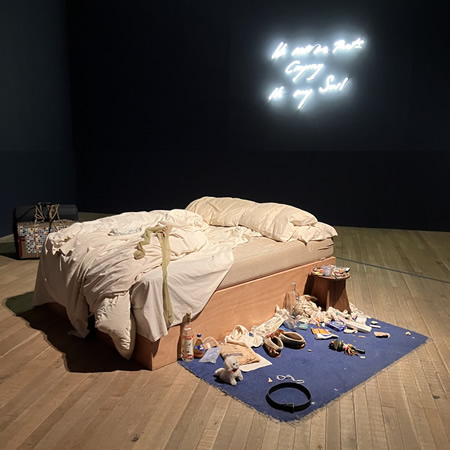
I had to take a picture (again) of her famous installation My Bed as I remember the controversy it caused in 1996 - I heard her once talking about it: coming into the room, taking in the scene, and perceiving it as "just right", and although I am (and was in 1996) miles away from her life and difficulties, I always thought it is indeed "just right". I was never so keen on her tent, but the bed was ... perfect. She rejects the term confessional art, but I do think unapologetic self-expression sums it up well.
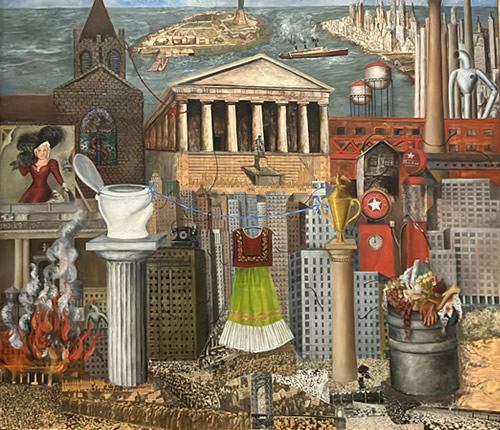
I was surprised to find that Frida: The Making of an Icon has already opened so we could not resist also viewing that. In a previous exhibition at the V&A, in terms of her paintings, I mainly saw self portraits so it was interesting to view her other art, some of which are quite surrealist - even thought that was a label she supposedly rejected. This is My Dress Hangs There (1933) with its background of items she considers symbolic of America - intended as a criticism, and showing her desire to return to Mexico.
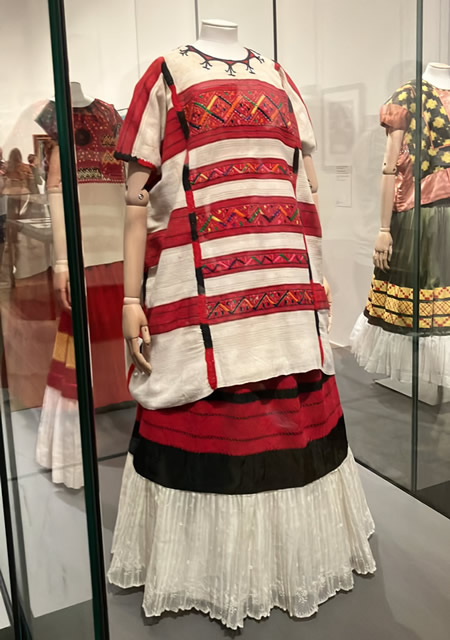
And of course there was a display of her iconic and wonderful folk dresses.
However, as well as Frida's own art, the gallery displays works by other artists from following eras inspired by her - from female contemporaries' self-portraits, to modern artists. The final rooms showcase commercial objects (‘Fridamania’) using her art, image, and style.
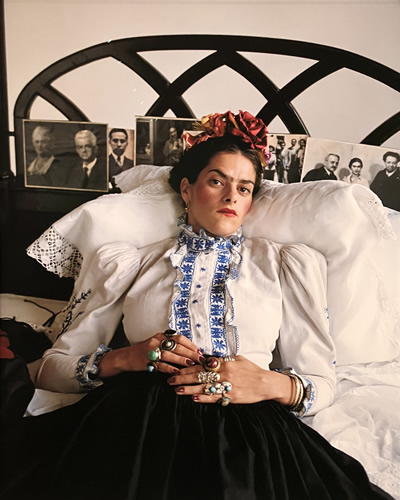
I have not dwelt on the themes that preoccupied Emin and Frida as I find them a bit disturbing (as intended), but I was really surprised about how much overlap there was. So I was truly delighted that they included a photographic art work by Mary McCartney from 2000 Being Frida.
I cannot end without mentioning that YET AGAIN the rail system was a complete farce (disaster happily averted in this case) and a repeat of our experience in going to the Turner/Constable exhibition last February. I paid for a full day parking at Surbiton but once we were on the train they announced an unspecified delay due to signalling issues. Once bitten twice shy, we bailed immediately and drove to Richmond to catch the tube; this proved to be quite a good route as it's on the right line for South Ken - barring a second full day parking fee - and we arrived in good time for the Prom.
Friday July 31st, 2026
Books in July
- Cold Sunset by William Boyd
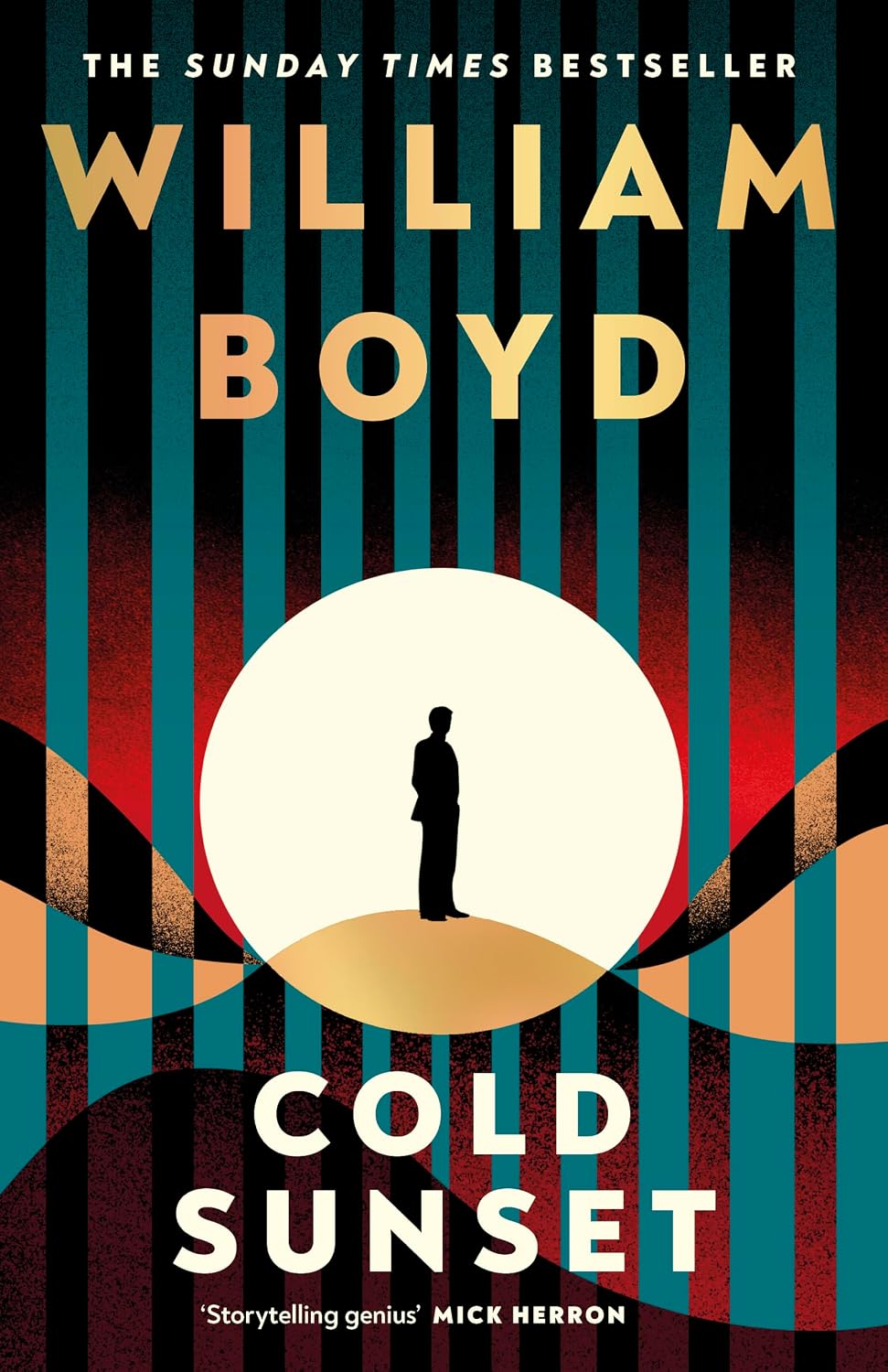
We are now quickly on to Boyd's third spy thriller featuring Gabriel Dax. Looking back, our hero has moved on considerably since we were first introduced to him. He is still a moderately unwilling spy, but he has proved to be very good at the work - mostly because he acts quickly and professionally in stressful situations.
"The Institute" is steeped in the world of 1960s espionage: moles and defectors, the Cambridge spy ring, the elusive fourth (and perhaps fifth) man, and spies coming in from the cold. It is a world built on betrayal and double-dealing. Even Gabriel himself finds he has become embroiled in a sanctioned pretence of being a double agent, which at times seems almost like a joke. As if that were not enough, he is still being pursued by a hitman in the wake of his previous mission. This finally forces him to go abroad and off-grid for several months, during which time he usefully occupies himself by writing about his recent travels for his new book, "On the Beaten Track".
It is obvious that he greatly enjoys his "real" job as a travel writer, which some might now justifiably call his "cover"! He clearly relishes both the travel and the writing, and it is almost ironic that his espionage work gives him the opportunity to visit places that would otherwise have remained beyond his reach.
The novel ends on an unsettling note. There is an air of mistrust, and a number of questions remain unanswered, not only for the reader but also for Gabriel himself, as he is no fool. Thus we leave him deep in thought about his future in general and, more personally, about his relationship with his beloved Faith Green. - A Very Dangerous Pursuit by Ben Miller [Read by Ben Miller]
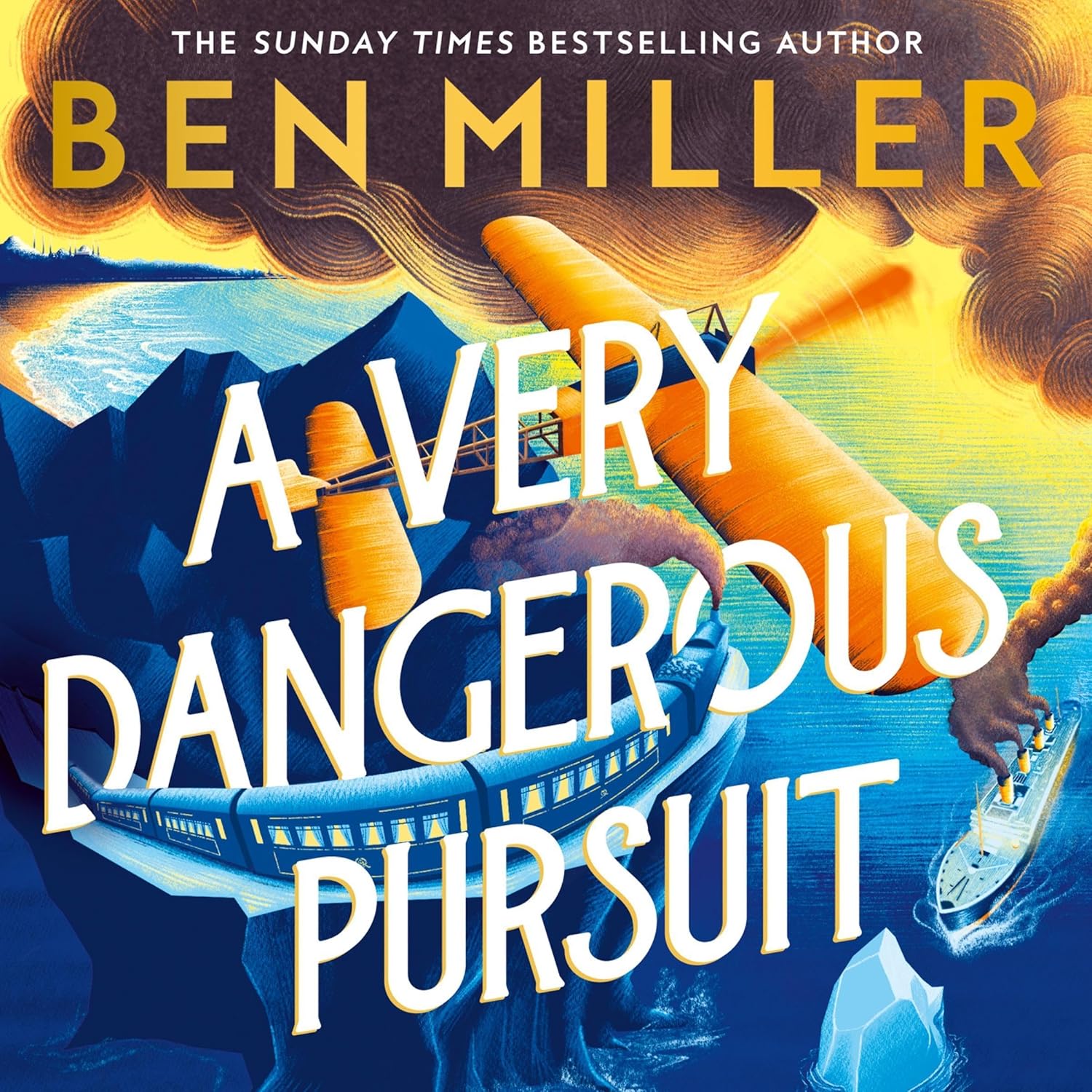
I hadn't realised Ben Miller was an author as well as being a splendid actor. I'm now seeing he has written a number of children's books, and I am intrigued to see him take on Richard Hannay. In many ways the adventure story isn't so very different, but make no mistake: this is definitely a novel for adults.
Having read the first three Hannay novels a few years ago, I was delighted by how well Miller captures Buchan's style. He has all the familiar ingredients: the absurd scarpering about all over the Continent, the frankly unbelievable disguises (including Hannay's own), and the marvellous episodic cliff-hangers that leave you wanting to read just one more chapter.
Like Fleming's Bond, Hannay can be a difficult hero for the modern reader. Miller, though, manages to make him far more palatable without fundamentally changing who he is. There is a female character at the heart of the story, but she is handled in a way that feels true to Buchan's world, while Miller also has some gentle fun with Hannay's rather awkward attempts to understand - and suppress — his reactions to her.
If you can't get past the racial stereotypes and attitudes towards women that appear in Buchan's original novels, this reimagining may not be for you, although I'm sure Miller is definitely poking fun at those aspects rather than endorsing them.
As both a new adventure and a loving Buchan pastiche, I thought this was a tremendous success. It is exciting, affectionate, frequently very funny, and, above all, a cracking good read.
As an additional note: this is an occasion where an author as narrator works well. Miller is an actor - his pace of reading and differentiation of voice make everything clear even at points of high drama. Take note Richard Coles. -
A Death on Location by Richard Coles [Read by Richard Coles]
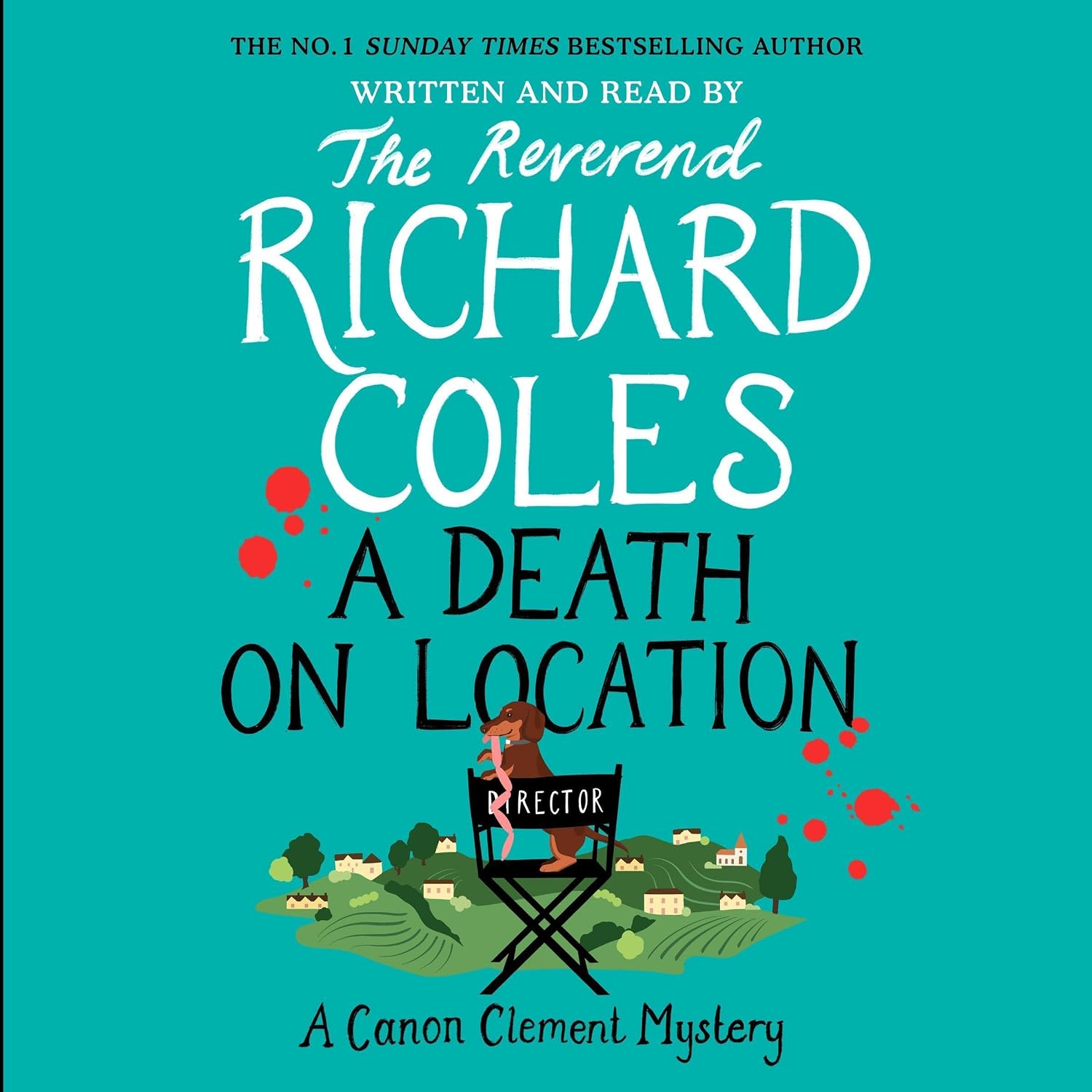
Another interesting and amusing addition to the Canon Clement mystery series, which continues to entertain me. In this story it's not so much of a local affair because an entire film crew descends on Champton House so there are a lot of external influences to explain yet another death in the area. However, maybe we have got past the obstacle of "gosh not another murder in Champton involving the Cannon!" and we are evolving into Midsomer Murders.
Given where we last left the relationship between Daniel and Neil, I was a bit taken aback by where it appears to be going from here. I think that the author must have had a bit of a rethink about whether a romantic connection between these two was entirely sustainable given Neil's position in the police force - I can only speculate. Anyway - it's remains all a bit awks between them.
As read by the author, I'm afraid I'm still confused about which person is speaking; hard to see how he'll resolve this other than by saying "Fred said" and "Ethel said" etc after each piece of dialogue - or maybe - I don't know - off the wall suggestion but... get an actor to narrate the books!? - The Singing Sands by Josephine Tey [Read by Karen Cass]
Tey wrote only half a dozen Alan Grant novels, and this is the last of them, published posthumously. Grant has always been portrayed as introspective and solitary, despite his obvious intelligence and outwardly affable manner. Here he travels to Scotland ostensibly for a fishing holiday, but in reality to recover from stress, which manifests itself in panic attacks and claustrophobia. These symptoms are entirely inexplicable to Grant, who has never experienced anything like them before. I think Tey gives an excellent description of what we would now rather blandly describe as "mental health issues".
The plot itself begins with Grant encountering a death on the overnight sleeper train to Scotland. The guard asks for his assistance, but once the local police arrive the death is judged accidental and the victim apparently identified. Grant, however, has absent-mindedly picked up a newspaper from the dead man's compartment. Insignificant though it seems, a curious little verse scribbled in the margin catches his attention. He cannot put it out of his mind and is gradually drawn into the puzzle, eventually going to considerable lengths to discover the man's true identity. I thoroughly enjoyed this cleverly constructed mystery. I found the murder itself unexpectedly moving and was very glad to see the ruthless perpetrator finally brought to justice. (I was also rather taken with the romance of the title.)
The first part of the novel is devoted largely to Grant's recuperation and "holiday" with his close friends in Scotland. He relaxes, eats well and goes fishing. It is while fishing that he meets a young widow, and it soon becomes apparent that the two are attracted to one another and remarkably well suited. Grant begins to contemplate a different life beyond the police: less solitary and more tranquil.
I can't help wondering whether Tey herself was considering such a future for him. Until now, Grant has had no real romantic involvement, and perhaps Tey, like Sayers with Lord Peter Wimsey, was exploring how a detective might move beyond the life that had defined him. Tey herself remained unmarried, and although I feel cautious about drawing parallels between an author and her characters, Grant's reflections feel curiously personal. In the end, however, he rejects the possibility of a new beginning and returns to his work in London.
As the last Alan Grant novel, whether by design or simply because of Tey's untimely death, the book has an unmistakable sense of finality. Had she lived, the series could easily have continued, yet as an ending, this feels entirely fitting.
Wednesday July 22nd, 2026
Eltham Palace
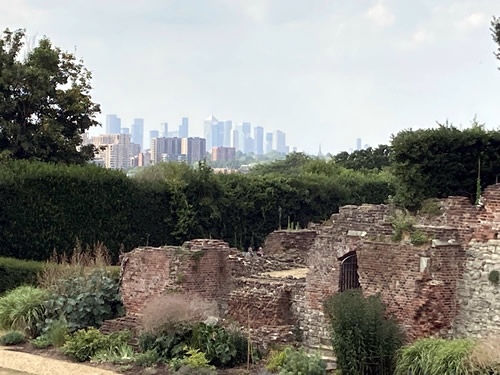
We were both surprised to realise that for all its proximity, we've never been to visit Eltham Palace - so we decided to rectify that.
I only "know" of Eltham in connection with the Tudor era, but actually that only demonstrates how little I know of it. True, Henry VIII was brought up there, but it was mainly raised to the status of a palace much earlier by Edward IV, who (not personally presumably) built the Great Hall in the 1470s - and which is now the only part of the "palace" still remaining. After the Tudors and the grand rebuilding of Greenwich Palace, which was more easily reached by river, Eltham gradually declined in status.
The current house and buildings result from the refurbishment by the Courtaulds who purchased it as a ruin in the 1930s. The result was a magnificent art deco mansion. However, the Courtaulds left after the war and never returned; the buildings were given over to and occupied by the Royal Army Educational Corps, and when they left in 1992, English Heritage were thankfully able to take over the management of the site.
The architecture (Seely & Paget) and gardens are still absolutely splendid. In the interior, EH have curated a really interesting exhibition recreating the hedonistic between-the-wars millionaire lifestyle of luxury and house parties, using photos, artifacts, and contemporary film (newsreel and home movies). The gardens include topiary, a sunken rose garden, a walk around the medieval moat, and an amazing rock garden - for which Stephen Courtauld imported real Westmorland limestone.
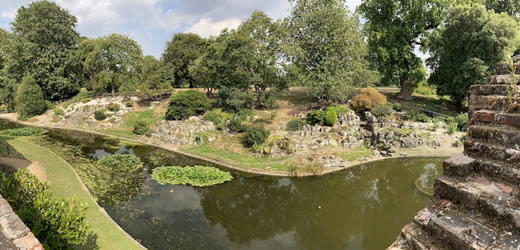
Of course, neither we nor the gardens were at their very best during this heatwave, so I hope we will visit again in a different season.
The weather had brought out one unexpected visitor - a Jersey Tiger moth. I am not familiar with them but they have moved up from Jersey, and are apparently now fairly common in the south of England.

In general, we tend to make more use of our National Trust membership than of English Heritage (not quite as many places in our area) but this is one marvellous site of which they are the custodians.
[Next outing planned for Darwin's House - also relatively local.]
* As well as the marvellous deco entrance hall, used to great effect in the TV adaptation of Three Act Tragedy, with David Suchet and Martin Shaw, I was very amused by Virginia Courtauld's en suite gold bathroom. I feel it must have been the inspiration for the section in Agatha Christie's The Mirror Crack'd from Side to Side when all the locals are speculating about the film star who has taken over Gossington Hall from Dolly Bantry, and where the refurbishments include a fabulous Italian marble bathroom.